


Best Online Casinos in The Gambia: Legal Status for November 2026
Short answer: The Gambia has no licensed online casinos, so we can’t rank any. The country licenses land-based casinos through the Gambia Tourism Board, and the Gambia Revenue Authority administers the Betting and Gaming Act. But no Gambian law or licence for online casino or online betting has been found. The casino and betting apps that Gambians use every day operate without any Gambian online licence.
So this guide doesn’t carry sign-up links. It explains what Gambian law says, including the new Criminal Offences Act 2025, which can fine players found in an unlawful gaming house. It also covers the 50% tax on gambling winnings that applies in 2026 and the proposal to cut it to 40% in 2027. Finally, it explains where you can play legally and how to protect yourself from scams and gambling harm. Every fact comes from official documents or reputable news, and anything we couldn’t confirm is left out.
This page has no affiliate links. We don’t promote any online casino to players in The Gambia, because none holds a Gambian online licence. This is general information, not legal advice.
📌 Key takeaways
- No Gambian online casino licence exists. No law or licence for online casino or online betting has been found.
- Land casinos are licensed, but not online play. The Gambia Tourism Board licenses casinos, and GIABA counted 14 licensed casinos in 2021, all foreign-owned.
- Winnings are taxed at 50% in 2026. That’s up from 40% in 2025 and 30% before. The 2027 budget proposes cutting it back to 40%.
- Players can be fined. Under the Criminal Offences Act 2025, people found in a common gaming house are presumed to be gambling unlawfully, with a D5,000 fine for a first offence.
- No help system yet. There’s no dedicated gambling regulator, no national self-exclusion scheme and no gambling helpline on record.
⚡ Quick answer: online casinos in The Gambia (November 2026)
| Question | Answer |
|---|---|
| Are online casinos licensed in The Gambia? | No. No online casino law or licence has been found. |
| Is there a gambling regulator? | No dedicated regulator. The Tourism Board licenses casinos, and the GRA administers betting and gaming tax. |
| Main laws | Betting and Gaming Act; Pool Betting (Licensing) Act; Criminal Offences Act 2025; Gambia Tourism Board Act 2011 |
| Licensed land casinos | 14 counted by GIABA in 2021, all foreign-owned |
| Tax on winnings | 50% in 2026 (40% proposed for 2027) |
| Minimum age | 18 (reported by local press and operators; the statute isn’t published online) |
| Self-exclusion or helpline | None on record |
| Currency | Gambian dalasi (D / GMD) |
🧭 Why this guide has no casino ranking
On our country pages, a brand only makes the ranking if it clears three checks. It has to hold a local licence for the product we’re reviewing, which here is online casino, and we have to be able to verify that licence. It has to accept local players legally. And it must not appear on any list of illegal operators. In The Gambia, no online casino passes the first check, because no Gambian online casino licence exists.
That gap hasn’t stopped the market. Foroyaa reported in April 2025 that betting parlours “have mushroomed across towns”, and that mobile apps such as Bwinners, 1xBet and Gambit have “gained a stronghold among the youth”. Young players told the paper they bet not only on football but also on virtual games like Aviator. Many affiliate sites rank “the best Gambian online casinos” anyway, usually offshore brands licensed in Curaçao. A foreign licence gives you no legal standing or protection in The Gambia.
Instead of a ranking, this guide explains the law, the tax rules, the land casinos that operate legally and the practical risks. It also lists the brands you’ll hear about and explains why we don’t recommend them for casino play.
⚖️ Is online casino legal in The Gambia?
There’s no legal framework for it. iGaming Times found no Gambian law or licence for online casino or online betting, so it records both as “no data”. Local press nonetheless reports that betting companies take bets through apps and street agents. Gamblingmaps describes online casino, sports betting and poker as unregulated: no Gambian licence exists for them, and the sites that offer them operate without one.
“Unregulated” isn’t the same as “safe” or “allowed”. Gambian law prohibits unlicensed gaming houses and betting houses. Press reports say the Betting and Gaming Act restricts gambling by Gambians. Players on an offshore site also have no Gambian authority to complain to if they aren’t paid.
Who oversees gambling
The Gambia has no dedicated gambling regulator. Responsibility is split:
| Body | Role | Legal basis |
|---|---|---|
| Gambia Tourism Board (GTB) | Licenses casinos; can suspend or revoke a licence if the holder is no longer fit and proper | Gambia Tourism Board Act 2011, ss. 32(1), 38(1)(a) |
| Gambia Revenue Authority (GRA) | Administers the Betting and Gaming Act as a revenue law and collects the winnings tax | Betting and Gaming Act |
| Financial Intelligence Unit (FIU) | Anti-money-laundering supervisor for casinos | AML/CFT Act 2012 |
| Local councils | Issue temporary permits that some street gambling setups use | Local permits (scope disputed) |
The key laws
| Law | What it does | Notes |
|---|---|---|
| Betting and Gaming Act | Main gaming statute, administered by the GRA | Not published online. Foroyaa dates it to 1973 (Act No. 16); a GRA form cites a 1990 Act. |
| Pool Betting (Licensing) Act, Cap. 85:02 | Licenses premises for pool bets | Not published online |
| Criminal Offences Act 2025, ss. 138–141 | Gaming house, betting house and lottery offences | Passed 28 March 2025; replaces the Criminal Code, Cap. 10:01 |
| Gambia Tourism Board Act 2011 | Casino licensing and supervision | ss. 16, 32, 38 |
| Tourism Regulations 2011, para. 103 | Casino licensing details | As cited by GIABA |
| AML/CFT Act 2012 | Casinos are reporting entities | ss. 42, 42(2) |
None of these laws creates a licence for casino games played over the internet. A casino licence is tied to a licensed establishment, and pool betting licences cover premises.
🚨 Penalties under the Criminal Offences Act 2025
The National Assembly passed the Criminal Offences Act on 28 March 2025, replacing the old Criminal Code. Sections 138 to 141 deal with gambling:
| Offence | Penalty | Section |
|---|---|---|
| Keeping a common gaming house | Misdemeanour | s. 138(3) |
| Being found in a common gaming house (players) | Presumed to be gambling unlawfully unless proved otherwise. D5,000 fine (1st offence); D20,000, 3 months, or both (later offences) | s. 138(4) |
| Owning, managing or assisting a common betting house | One year’s imprisonment | s. 139(2) |
| Running an unlicensed lottery or breaching licence conditions | Misdemeanour; possible forfeiture of equipment | s. 140(3), (6) |
| Printing, publishing or advertising an unlicensed lottery, or selling its tickets | D100,000 fine | s. 140(4) |
| Person acting as keeper of the premises | Treated as the keeper | s. 141 |
The Act exempts premises licensed under the Pool Betting (Licensing) Act and allows lotteries licensed by the relevant authority.
📅 From ban to boom: a short history
| Date | What happened |
|---|---|
| 2 Mar 2015 | The Office of President Yahya Jammeh bans lotteries, casinos and all gambling, calling the industry “exploitative”. |
| 2017 | After the change of government, the ban is withdrawn and betting returns. |
| 2021 | GIABA’s on-site visit counts 14 licensed casinos, all foreign-owned. |
| 2022 | GIABA’s mutual evaluation finds weak casino licensing checks and no AML supervision of casinos. |
| Dec 2024 | The 2025 Budget raises the winnings tax from 30% to 40%. |
| 28 Mar 2025 | The National Assembly passes the Criminal Offences Act 2025. |
| 5 Dec 2025 | The 2026 Budget raises the winnings tax to 50% and announces a digital platform to monitor gaming revenue. |
| 1 Jan 2026 | The 50% winnings tax takes effect; operators’ first filings are due by 15 February. |
| Mar 2026 | The GRA warns of scammers impersonating its officers. |
| 1 Apr 2026 | Serrekunda MP Halifa Sallah raises the alarm over street gambling near markets. |
| Sep–Oct 2026 | The 2027 Budget proposes cutting the winnings tax from 50% to 40%. |
| Nov 2026 | No gambling bill is listed on the National Assembly bill tracker. |
When the 2015 ban was announced, AFP reported that it would hit gaming centres and casinos across the country’s tourist resorts, as well as scores of sports betting shops in Banjul. The government said it acted to stop young people becoming “a generation of addicts”. Betting came back after 2017, and The Point reported a few years later that it had “regained momentum”.
💰 The 50% tax on gambling winnings
The Gambia has used tax as its main tool against gambling harm, and its rate has risen fast:
| Period | Tax on winnings | Source |
|---|---|---|
| Before 2025 | 30% | 2025 Budget |
| 2025 | 40% | 2025 Budget (December 2024) |
| 2026 | 50% | 2026 Budget (5 December 2025) |
| 2027 (proposed) | 40% | 2027 Budget estimates |
Presenting the 2026 Budget, Finance Minister Seedy Keita said: “The tax rate on the winnings from betting, gaming, lottery, and gambling will be increased from 40 percent to 50 percent of the winnings to reinforce the fight against the menace posed by gambling and betting in society.” Focus Gaming News reported that the increase gives The Gambia the highest tax rate on gambling winnings in Africa. The Budget Speech estimated the measure would raise D72.7 million in 2026.
How the tax works
- What’s taxed: the payout minus the stake. The tax covers winnings from sports betting, casinos, lotteries, slot machines and other legal gaming.
- Who collects it: the operator withholds it at payout and remits it to the GRA. Licensed operators file a monthly Pool Betting Tax Return (form GRA RET 18), due 15 days after the end of the month. The first filing under the 50% rate was due on 15 February 2026.
- Earmarked share: 5% of pool betting revenue goes to the Ministry of Youth and Sports, about D5 million expected in 2026.
- Monitoring: the 2026 Budget announced a digital platform to improve monitoring and revenue assurance in the gaming sector.
A worked example: if you stake D100 and the payout is D1,100, your winnings are D1,000. At 50%, D500 is withheld, so you receive D600 in total.
What 50% vs 40% means for your payout
| Stake | Gross payout | Winnings (payout minus stake) | You receive at 50% | You’d receive at 40% |
|---|---|---|---|---|
| D20 | D200 | D180 | D110 | D128 |
| D100 | D1,100 | D1,000 | D600 | D700 |
| D500 | D5,500 | D5,000 | D3,000 | D3,500 |
| D1,000 | D21,000 | D20,000 | D11,000 | D13,000 |
The tax takes a big bite out of every win, which changes the maths of betting. At 50%, a bet has to pay out far more than usual just to make your effort worthwhile, and small accumulators lose much of their appeal.
How The Gambia compares with other African countries
The Gambia’s 50% rate stands out. Focus Gaming News described it as the highest tax on gambling winnings in Africa. For comparison, Togo introduced a 5% withholding tax on lottery and gambling winnings above CFA 500,000 from 1 January 2026. Uganda keeps a 20% withholding tax on gambling winnings. Ghana has gone the other way: its finance minister said in November 2026 that the government had abolished the withholding tax on betting and lottery winnings.
The proposed cut to 40% in 2027
The 2027 Budget estimates, tabled by Finance Minister Seedy Keita, propose reducing the tax on betting, lottery, gaming and gambling winnings from 50% to 40%. The Standard reported the proposal on 28 September 2026 without giving a reason or an effective date. The budget still had to pass through the legislative process. The Appropriation Bill 2027 reached third reading on 28 October 2026, and we haven’t seen the final finance law confirming the new rate. Until it’s confirmed, treat 50% as the rate in force for 2026.
🏨 Land-based casinos in The Gambia
Casinos are the one form of casino gaming that Gambian law clearly provides for. The Gambia Tourism Board licenses them under the Tourism Board Act 2011. Applicants must be registered companies and must prove the lawful origin of their capital under the AML/CFT Act. They also need a Gambia Police Force certificate of character.
The anti-money-laundering body GIABA counted 14 licensed casinos during its 2021 on-site visit, all foreign-owned. No more recent official count, and no official list of names and locations, has been published. So we don’t name individual venues. If you visit a casino, ask to see its Tourism Board licence.
Weak oversight
GIABA’s 2022 mutual evaluation was critical of casino supervision. It found that:
- the Tourism Board didn’t verify documents submitted by applicants;
- it didn’t test beneficial owners or senior managers, or screen foreign owners against sanctions lists;
- the FIU hadn’t supervised casinos for AML/CFT and had applied no AML/CFT sanctions to any reporting entity.
GIABA rated casinos medium-high risk for money laundering. Casinos must identify customers who buy chips or tokens above GMD 10,000, carry out customer due diligence on transactions of US$3,000 or more, and report suspicious transactions to the FIU.
🎟️ Betting shops, agents and apps
Most Gambians who gamble do it through sports betting, not casinos. Betting shops returned after the 2015 ban was lifted. In a 2020 report, the owner of Bwinner’s Betting told The Point that his company barred anyone under 18 and anyone in school uniform. He said betting centres pay their taxes to the GRA and the Kanifing Municipal Council. In 2021, Gambibet’s marketing manager told the paper that the company had “over 150 sub agents and 25 staff”, offering football and PMU (horse racing) bets.
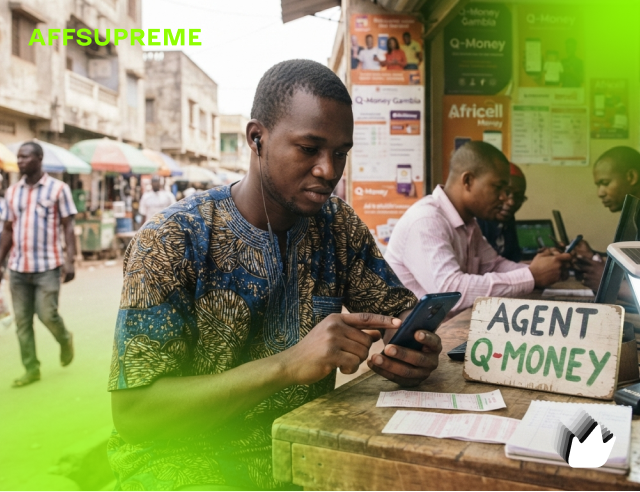
The mobile shift has been rapid. Foroyaa cited an unnamed study finding that 75% of Gambian gamblers prefer mobile betting, for ease of use, fast cash-outs and anonymity. The young bettors it interviewed said apps let them bet from as little as D1, and none recalled being asked for ID. One said accounts needed only “a phone number and a username”.
That matters for casino players, because betting apps also carry casino-style games. The young players Foroyaa interviewed named the crash game Aviator and virtual horse races alongside football. No Gambian licence covers casino games online. A licence for a betting shop or for pool betting premises isn’t an online casino licence.
🏪 Street gambling near markets
A newer concern is street gambling. On 1 April 2026, Serrekunda MP Halifa Sallah told the National Assembly that operators were setting up “canopies or tents topped with equipment trying to lure women” at markets. Focus Gaming News reported that these setups target market women and young people, encouraging them to stake small daily earnings for bigger returns. Sallah said the methods expose gaps in the Betting and Gaming Act and called for a review of the legal framework.
Enforcement is inconsistent. Local councils issue temporary permits that allow some of these setups to operate, which creates regulatory overlap. In 2025, Serrekunda MP Musa Cham and Basse MP Saikou Bah also raised alarms in the National Assembly about street gambling and its effect on young people.
📱 Payments and practical points
Bets in The Gambia are placed at betting shops, through street agents or in mobile apps. A few practical rules apply whatever you play:
- Expect 50% to be withheld from winnings at licensed operators in 2026.
- Use your own phone number and wallet. Accounts registered to someone else can be frozen, and payouts can be refused.
- Keep records of deposits, bet slips and withdrawal requests until the money arrives.
- Never pay a “release fee”. Real operators deduct tax at source and don’t ask you to send money before paying out.
- Check anyone claiming to be from the GRA. Ask for their GRA Staff ID number and verify it on the GRA’s online portal before paying anything.
🔎 Brands you’ll hear about, and why we don’t rank them
Gambians commonly mention a handful of betting and casino names. Here’s where each stands for casino play, based on what we could verify:
| Brand | What sources say | Our position |
|---|---|---|
| Bwinners / Bwinner’s Betting | Local betting company with shops; its app is popular with young bettors (Foroyaa) | No Gambian online casino licence exists, so it isn’t ranked for casino |
| Gambibet | Local betting company offering football and PMU bets, with a sub-agent network (The Point) | Not ranked; no online casino licence exists |
| 1xBet | Named by Foroyaa among apps popular with Gambian youth | No Gambian licence found; not ranked |
| Gambit | Named by Foroyaa among popular betting apps | No Gambian licence found; not ranked |
| Offshore casinos (Curaçao and similar) | Widely promoted on affiliate sites as “best Gambia casinos” | No legal standing in The Gambia; not ranked |
Some local companies may hold land-based betting or pool betting licences, but we couldn’t verify the licence status of any named operator from an official source. And even a valid betting licence wouldn’t make an operator’s online casino section licensed, because no Gambian online casino licence exists.
⚠️ Gambling harm among young Gambians
Concern about youth gambling runs through Gambian reporting. In April 2025, Foroyaa published an investigation into what it called the country’s “rising youth gambling addiction”. Its findings:
- Early starts. The legal minimum age is 18, but many start in their early teens. One 22-year-old began betting at 11. Field visits to betting agents in Bundung and Tallinding found boys in school uniforms placing bets.
- Low stakes, steady losses. A 20-year-old said he spends about D50 a week, sometimes skipping lunch, and has won D5,000 in total over four years. He said he has failed exams because of betting. A 29-year-old estimated his losses at more than D30,000.
- Betting to migrate. A 26-year-old said he gambles at least twice a day, hoping to fund migration to Europe.
- Serious harms. Stealing from relatives, selling household items, borrowing from loan sharks, and falling academic and job performance.
- No safety net. There’s no national addiction helpline, no school awareness programmes, and no active monitoring of age limits.
A Banjul psychologist told Foroyaa that compulsive gamblers go through dopamine cycles similar to drug users. A social worker in Brikama said the government was silent while a generation became hooked. Activists and community leaders are calling for age verification, betting limits and dedicated addiction treatment.
The government’s response so far has been fiscal: the 2026 winnings tax was raised explicitly to fight “the menace posed by gambling and betting in society”. Focus Gaming News noted that critics worry tax policy alone doesn’t address the social impact of street-level betting.
🌐 Offshore casino sites: what you’re risking
Offshore casinos are easy to find from The Gambia, and affiliate sites rank them freely. Here’s what using one means in practice:
❌ No Gambian licence
No Gambian authority has approved the site, tested its games or checked who owns it.
❌ No local complaint route
If the site refuses a withdrawal or closes your account, neither the GRA nor the Tourism Board can intervene.
❌ No age or limit checks you can rely on
Foroyaa’s interviewees said apps asked for nothing more than a phone number and a username. Weak checks also mean weak protection for you.
❌ Legal uncertainty
Gambian law penalises unlicensed gaming houses, and press reports say the Betting and Gaming Act restricts gambling by Gambians. Playing offshore doesn’t put you inside any licensed system.
🚩 Scams to watch for
- Fake tax officials. In March 2026, the GRA warned that “scammers are impersonating GRA officers and collecting money illegally”. It launched an Online Staff Identification Verification Portal. Always ask for a GRA Staff ID number and verify it before paying. The GRA’s advice: “Do NOT make any payment without verification.”
- “Unlock your winnings” fees. Any site or agent that asks you to pay before releasing a payout is running a scam. Licensed operators withhold tax at source.
- Street “quick money” games. MPs have warned about tents and canopies near markets that lure shoppers into staking their daily earnings.
- Guaranteed tips and “fixed” games. Nobody can guarantee a win. Paid “sure odds” groups and crash-game “predictor” apps are designed to take your money.
- Fake bonuses. Huge welcome offers from unknown casinos often come with conditions that make withdrawal almost impossible.
How to check a gambling operator in 5 steps
- Ask what it’s licensed for, and by whom. Casinos are licensed by the Tourism Board for physical venues. No Gambian authority licenses online casinos.
- Look for a physical presence. Licensed casinos and betting shops have premises you can visit and a licence you can ask to see.
- Check how winnings are taxed. A licensed operator withholds the winnings tax and should show it on your payout.
- Use only your own wallet and number. Never fund an account through a third-party agent you don’t know.
- Never pay to withdraw. It’s the clearest scam signal there is.
🎲 What you can legally play today
| Option | Status | What to know |
|---|---|---|
| Slots and table games | Licensed land casinos (Tourism Board) | 14 licensed casinos counted in 2021. Press reports say Gambians are barred from casinos, which we couldn’t verify. |
| Sports and pool betting | Licensed betting premises | 50% of winnings withheld in 2026 |
| Lottery | Allowed if licensed by the relevant authority | Advertising an unlicensed lottery carries a D100,000 fine |
| Online casino | No Gambian licence exists | No legal protection for players |
🔮 Will The Gambia license online casinos?
Not soon, on current evidence. iGaming Times checked the National Assembly bill tracker in September and November 2026 and found no gambling bill listed. The policy signals point in different directions:
- Tougher on gambling: the government raised the winnings tax twice in two years and presented the 2026 increase as a way to fight gambling harm. The Criminal Offences Act 2025 keeps penalties for unlicensed gaming and betting houses.
- More oversight: the 2026 Budget announced a digital platform to monitor gaming revenue, and MPs such as Halifa Sallah have called for the Betting and Gaming Act to be reviewed.
- Some easing on tax: the 2027 Budget proposes cutting the winnings tax back to 40%.
None of these steps creates an online casino licence. If The Gambia does modernise its gambling law, the likely first priorities are age checks, street gambling and revenue monitoring, not opening an online casino market. We’ll update this guide if a bill is published.
🧐 Myths vs facts
| Myth | Fact |
|---|---|
| “This casino app is licensed in The Gambia.” | No Gambian online casino licence exists. A betting shop or pool betting licence isn’t an online casino licence. |
| “A Curaçao licence makes it legal here.” | A foreign licence has no legal standing in The Gambia and gives you no Gambian protection. |
| “My winnings are tax-free.” | Licensed operators withhold 50% of winnings in 2026. |
| “Only operators can be punished.” | Under the Criminal Offences Act 2025, people found in a common gaming house can be fined D5,000 for a first offence. |
| “Street tent games are licensed by the council, so they’re safe.” | Temporary council permits don’t make them regulated gambling, and MPs have called them a gap in the law. |
| “There’s a helpline if I need help.” | No dedicated gambling helpline or self-exclusion scheme is on record. Your doctor or a health centre is the place to start. |
🔬 Our methodology
We research every country page the same way. A brand can appear in a ranking only if it passes three checks:
- Local licence for the product: here, a Gambian online casino licence we can verify in an official source.
- Accepts local players legally.
- Not blacklisted by any authority.
No online casino passes check 1 in The Gambia, so this page has no ranking and no operator links. Our sources included the Criminal Offences Act 2025 (via the iGaming Times profile, verified 7 November 2026), the 2026 Budget Speech as reported by Kerr Fatou, SiGMA and Focus Gaming News, The Standard’s report on the 2027 Budget, GRA notices, the GIABA mutual evaluation, and reporting by Foroyaa and The Point. We didn’t use claims that appeared only on affiliate or unsourced sites, such as lists of “licensed” online casinos, named casino venues without an official source, or jackpot stories we couldn’t trace to a reliable report.
📖 Glossary
| Term | Meaning |
|---|---|
| GRA | Gambia Revenue Authority, which administers the Betting and Gaming Act and collects the winnings tax |
| GTB | Gambia Tourism Board, which licenses casinos |
| FIU | Financial Intelligence Unit, the AML supervisor for casinos |
| GIABA | Inter-Governmental Action Group against Money Laundering in West Africa |
| Common gaming house | Premises used for unlawful gaming under the Criminal Offences Act 2025 |
| Pool betting | Betting where stakes are pooled and shared among winners; licensed by premises |
| PMU | Pari-mutuel horse race betting |
| Withholding tax | Tax deducted by the operator from a payout before you receive it |
| D / GMD | Gambian dalasi, the national currency |
🧠 Play safely
Gambling should be entertainment, never a way to earn a living, pay rent or fund a journey abroad. Set a small budget, never chase losses and never borrow, whether from family, friends or loan sharks. Remember that in 2026 half of any winnings at a licensed operator goes in tax. The Gambia has no dedicated gambling helpline or national self-exclusion scheme on record. If gambling is causing problems for you or someone close to you, talk to someone you trust and to a doctor or health centre, who can refer you to mental health services. Delete betting apps and remove saved payment details. You must be 18 or older to gamble.
❓ Online casinos in The Gambia: FAQs
What is the best online casino in The Gambia?
There isn’t a licensed one. No Gambian law or licence for online casinos has been found, so no online casino holds Gambian approval.
Are online casinos legal in The Gambia?
There’s no legal framework for them. The Gambia licenses land-based casinos, but no law creates an online casino licence, and players on offshore sites have no Gambian protection.
Is online betting legal in The Gambia?
No online betting licence has been found either. Local press reports that betting companies take bets through apps and street agents anyway.
Who regulates gambling in The Gambia?
There’s no dedicated regulator. The Gambia Tourism Board licenses casinos, the Gambia Revenue Authority administers the Betting and Gaming Act and collects the winnings tax, and the Financial Intelligence Unit supervises casinos for money laundering.
What is the Criminal Offences Act 2025?
It’s the law that replaced the old Criminal Code, passed by the National Assembly on 28 March 2025. Sections 138 to 141 cover common gaming houses, betting houses and lotteries.
Can players be fined for gambling in The Gambia?
Yes, in some cases. People found in a common gaming house are presumed to be gambling unlawfully and face a D5,000 fine for a first offence, and D20,000, three months’ imprisonment, or both for later offences.
Are Gambians allowed to gamble in casinos?
Press reports say the Betting and Gaming Act bars Gambians from casinos and isn’t enforced. The Act isn’t published online, so this couldn’t be independently verified.
How much is the tax on gambling winnings in The Gambia?
50% in 2026, up from 40% in 2025 and 30% before that. It’s charged on the payout minus the stake and withheld by licensed operators.
Is the Gambia winnings tax going down in 2027?
The 2027 Budget proposes cutting it from 50% to 40%. We haven’t seen the final finance law, so treat 50% as the rate in force until the cut is confirmed.
Why did The Gambia raise the winnings tax to 50%?
Finance Minister Seedy Keita said the increase was meant “to reinforce the fight against the menace posed by gambling and betting in society”. The Budget Speech expected it to raise D72.7 million in 2026.
Does the 50% tax apply to online casino winnings?
It applies to winnings from legal gambling and is withheld by licensed operators. Offshore casinos with no Gambian licence don’t withhold it, which also means you have no Gambian record of your win.
How many casinos are there in The Gambia?
GIABA counted 14 licensed casinos in 2021, all foreign-owned. No more recent official count or list of venues has been published.
Who licenses casinos in The Gambia?
The Gambia Tourism Board, under the Gambia Tourism Board Act 2011. It can suspend or revoke a licence if the holder is no longer fit and proper.
Was gambling ever banned in The Gambia?
Yes. On 2 March 2015, President Yahya Jammeh’s government banned lotteries, casinos and all gambling. The ban was withdrawn after the 2017 change of government.
Is Bwinners licensed for online casino?
No Gambian online casino licence exists, so no operator can hold one. Bwinners is a local betting company whose app is popular with young bettors.
Is 1xBet legal in The Gambia?
We found no Gambian licence for 1xBet. Foroyaa names it among apps popular with young Gambians, but popularity isn’t a licence.
Are offshore casinos safe for Gambian players?
They’re outside any Gambian oversight. If an offshore casino refuses to pay, neither the GRA nor the Tourism Board can help you.
What is the minimum gambling age in The Gambia?
18, according to local press and betting operators. Foroyaa found that many young people start in their early teens and are rarely asked for ID.
Is there a gambling helpline in The Gambia?
None is on record, and there’s no national self-exclusion scheme. A doctor or health centre can refer you to mental health services.
What is street gambling in The Gambia?
Operators set up tents or canopies near markets and invite shoppers, especially women and young people, to stake small sums. Serrekunda MP Halifa Sallah raised the issue in the National Assembly on 1 April 2026.
Do Gambian casinos have to follow anti-money laundering rules?
Yes. Under the AML/CFT Act 2012, casinos must identify customers buying chips above GMD 10,000, carry out due diligence on transactions of US$3,000 or more, and report suspicious transactions to the FIU.
What did GIABA find about Gambian casinos?
In 2022, GIABA found that the Tourism Board didn’t verify applicants’ documents or screen foreign owners, and that the FIU hadn’t supervised casinos for AML. It rated casinos medium-high risk.
How do I spot a fake GRA official?
Ask for their GRA Staff ID number and check it on the GRA’s online verification portal before paying anything. The GRA warned in March 2026 that scammers were impersonating its officers.
Can I advertise a lottery in The Gambia?
Only a licensed one. Printing, publishing or advertising an unlicensed lottery, or selling its tickets, carries a D100,000 fine under the Criminal Offences Act 2025.
Where does the money from betting tax go?
It goes to the government. In addition, 5% of pool betting revenue is earmarked for the Ministry of Youth and Sports, about D5 million in 2026.
Are crash games like Aviator legal in The Gambia?
No Gambian licence covers online casino or crash games. Young bettors told Foroyaa they play Aviator on betting apps, but that doesn’t make those games licensed.
Is there a plan to regulate online gambling in The Gambia?
No gambling bill was listed on the National Assembly bill tracker as of November 2026. The 2026 Budget announced a digital platform to monitor gaming revenue.
Can I use a VPN to play online casinos from The Gambia?
A VPN doesn’t create a licence or legal protection. You’d still be using a site with no Gambian oversight.
What should I do if a betting site won’t pay my winnings?
Contact the operator first and keep all records. The Gambia has no gambling regulator with a complaints process, so for a local operator your options are the operator itself and the courts. For offshore sites, the only route is the foreign regulator, if there is one.
Is The Gambia’s winnings tax the highest in Africa?
Focus Gaming News described the 50% rate as the highest tax on gambling winnings in Africa. By comparison, Uganda withholds 20%, Togo introduced 5% on large wins from 2026, and Ghana has abolished its tax on betting and lottery winnings.
How much do I actually receive from a winning bet in 2026?
Half of your winnings, plus your stake. For example, a D100 stake that pays out D1,100 gives D1,000 in winnings, so D500 is withheld and you receive D600.
Do local councils license gambling in The Gambia?
Councils issue temporary permits that some street gambling setups use, but this creates regulatory overlap rather than proper gambling licensing. MPs have called for national rules that clarify the limits of local permits.
Do betting companies in The Gambia pay tax?
Operators withhold the winnings tax and file a monthly Pool Betting Tax Return with the GRA. A betting company owner told The Point in 2020 that betting centres pay their taxes to the GRA and the Kanifing Municipal Council.
How can I gamble more safely?
Set a small budget, never borrow to gamble and don’t chase losses. Remember that 50% of winnings is withheld in 2026, and delete betting apps if you’re losing control.
🏁 Verdict: online casinos in The Gambia in 2026
As of November 2026, there’s no “best online casino” in The Gambia, because no Gambian online casino licence exists. Land-based casinos are licensed by the Gambia Tourism Board, and betting is taxed through the Gambia Revenue Authority. Online casinos and betting apps, though, operate outside any Gambian licensing system. The Criminal Offences Act 2025 keeps penalties for unlicensed gaming houses, including fines for players found in them. Winnings are taxed at 50% in 2026, with a cut to 40% proposed for 2027. Young Gambians face real harm from easy mobile betting, with no helpline or self-exclusion scheme to fall back on. If you want casino games legally, use a licensed land casino. Avoid offshore sites, street “quick money” games and anyone who asks for a fee to release winnings. We’ll update this guide if The Gambia changes its law.
18+ only · Gamble responsibly · Legal status checked 27 November 2026