


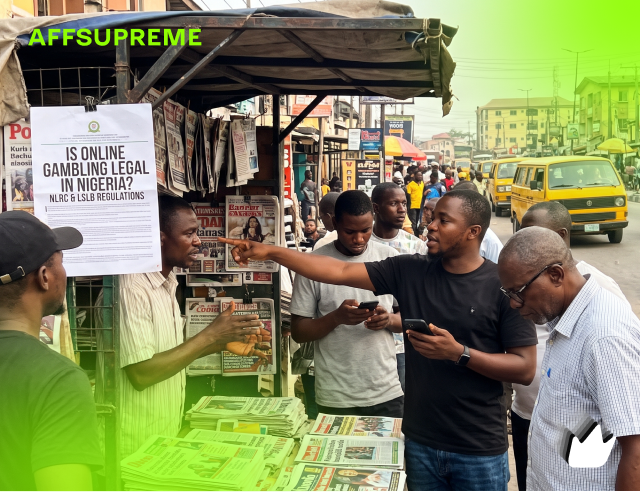
Is Online Gambling Legal in Nigeria? The 2026 Guide to State Laws, Licences and Tax
Is online gambling legal in Nigeria? Yes, in most of the country, as long as you play with an operator licensed by the right regulator. But the answer has changed a lot since 2024. In November 2024, Nigeria’s Supreme Court struck down the federal National Lottery Act and ruled that gambling is a matter for the states. A year later, President Tinubu refused to sign a bill that would have brought online gaming back under federal control.
The result is a state-by-state system. Lagos, home to most of Nigeria’s online betting and casino licences, has a detailed licensing regime, an official register, lists of illegal operators and a 5% tax on winnings. Several northern states, by contrast, prohibit gambling altogether. This guide explains what the law says in 2026, which regulators matter, how tax works, whether offshore sites are legal, and how to check that a betting or casino site is licensed.
Disclaimer: this guide explains Nigerian gambling law for general information. It isn’t legal advice. Advertising disclosure: AffSupreme may earn a commission when you sign up through links on this page; we only recommend operators licensed in Lagos.
📌 Key takeaways
- Legal, state by state: since the Supreme Court’s judgment of 22 November 2024, gambling (including online betting and casino) is regulated by Nigeria’s 36 states, not the federal government.
- Lagos leads: the Lagos State Lotteries and Gaming Authority (LSLGA) licenses online sports betting and online casino operators under the Lagos State Lotteries and Gaming Authority Law 2021.
- No federal online licence: President Tinubu said in December 2025 he would not sign the Central Gaming Bill, calling gambling a state matter.
- Some states ban it: penal codes in states such as Jigawa, Katsina and Bauchi prohibit gambling, and Kano’s Hisbah enforces a ban under Sharia law.
- Offshore sites: operators without a state licence are illegal in Lagos. Stake and bet365 appear on Lagos’s illegal-operator lists.
- Tax: Lagos deducts 5% withholding tax from net winnings; the Nigeria Tax Act 2025 exempts stakes from VAT.
- Age: licensed operators accept adults only (18+).
📋 Nigerian gambling law at a glance
| Question | Answer (October 2026) |
|---|---|
| Is online betting legal? | Yes, with a state-licensed operator, in states that allow gambling |
| Is online casino legal? | Yes in Lagos, which licenses online casino operators |
| Who regulates? | State regulators (e.g. LSLGA in Lagos); an FCT office for Abuja |
| Key court ruling | Supreme Court, 22 November 2024 (SC.1/2008, AG Lagos State & others v AGF & others) |
| Federal law | National Lottery Act 2005 nullified outside the FCT |
| Central Gaming Bill | Passed by the National Assembly on 2 December 2025; President declined to sign |
| Tax on winnings | 5% withholding tax on net winnings at Lagos-licensed operators |
| VAT on stakes | Exempt under the Nigeria Tax Act 2025 |
| Minimum age | 18 at licensed operators |
| Where gambling is banned | States applying Sharia or penal-code prohibitions, such as Kano, Jigawa, Katsina and Bauchi |
📅 How Nigerian gambling law got here: a timeline
| Date | Event |
|---|---|
| 2005 | National Lottery Act creates the National Lottery Regulatory Commission (NLRC) and a federal licensing system |
| 2008 | Lagos State and other states challenge the Act at the Supreme Court (suit SC.1/2008) |
| 2017 | National Lottery (Amendment) Act |
| 2021 | Lagos passes the Lagos State Lotteries and Gaming Authority Law 2021 |
| October 2023 | LSLGA bans unlicensed online operators in Lagos, including some holding NLRC licences |
| 22 November 2024 | Supreme Court nullifies the National Lottery Act outside the FCT; gambling becomes a state matter |
| May 2025 | An FCT Lottery Regulatory Office takes over oversight in Abuja |
| 2 December 2025 | National Assembly passes the Central Gaming Bill |
| December 2025 | President Tinubu says he won’t sign it: “It is a residual matter” |
| 2026 | Nigeria Tax Act 2025 takes effect, exempting stakes from VAT |
| February 2026 | Lagos introduces 5% withholding tax on net winnings |
| April and September 2026 | Lagos publishes new illegal-operator lists naming 1win.ng and Stake |
| July 2026 | LSLGA announces a census of payment providers and an audit of payment gateways |
| October 2026 | LSLGA orders telecoms to act against unlicensed mobile betting within 30 days |
🏛️ The 2024 Supreme Court ruling explained
For almost two decades, Nigeria had two layers of gambling regulation. The federal National Lottery Act 2005 created the National Lottery Regulatory Commission, which issued national permits, while states such as Lagos also licensed operators. Lagos and other states argued that the federal government had no power to legislate on lotteries and gaming, and took the case to the Supreme Court in 2008.
On 22 November 2024, the Supreme Court delivered a unanimous judgment in Attorney-General of Lagos State and others v Attorney-General of the Federation and others (SC.1/2008). It held that lotteries and gaming are “residual matters” under the Constitution: they aren’t on the list of subjects the National Assembly can legislate on, so they belong to the states. The National Lottery Act was nullified, except in the Federal Capital Territory (Abuja), where the federal government legislates for the territory.
What changed in practice:
- States now regulate gambling, including online sports betting and online casino, within their borders.
- NLRC permits lost their nationwide force. An FCT Lottery Regulatory Office began overseeing Abuja in May 2025, according to Aluko & Oyebode’s state-regulation tracker.
- Operators must hold state licences, most importantly from Lagos, where most online operators are based.
- States can also prohibit gambling. Kano’s Hisbah board said after the ruling that it would resume raids on betting shops, Leadership reported.
🚫 The Central Gaming Bill: why it failed
After the ruling, federal lawmakers tried to bring online gaming back under national control. The Central Gaming Bill 2025 (HB.2062) aimed to “regulate the operation and business of all forms of online and remote gaming” across state lines and from outside Nigeria, to provide for gaming in the FCT, and to repeal the National Lottery Act and its 2017 amendment, Channels TV reported. The Senate passed it in early December 2025.
The bill faced fierce opposition. Lagos’s Attorney-General argued it contradicted the Supreme Court judgment, Enugu also rejected it, and the Federation of State Gaming Regulators of Nigeria called it “an open affront on the supremacy of the Constitution”. LSLGA chief executive Bashir Are argued that its proposed Remote Gaming Licence would have let offshore operators bypass state regulation.
In December 2025, President Tinubu told his party’s National Executive Committee that he wouldn’t sign it. “Residual Matters belong to the exclusive legislative matters of the states,” he said, according to ThisDay, adding: “I won’t sign it.” Focus GN reported in January 2026 that Lagos was exploring legal action against the National Assembly over the bill. For players and operators, the message is clear: in 2026, online gambling is regulated by the states.
🗺️ Who regulates gambling in each state?
Aluko & Oyebode’s May 2025 tracker of state gaming regulation gives a picture of how different states approach gambling. Here are examples from the tracker:
| State | Law | Regulator |
|---|---|---|
| Lagos | Lagos State Lotteries and Gaming Authority Law 2021 | Lagos State Lotteries and Gaming Authority |
| Oyo | Oyo State Gaming Law 2018 | Oyo State Gaming Board |
| Edo | Edo State Gaming Law 2021 | Edo State Board of Internal Revenue |
| Imo | Imo State Lotteries and Gaming Authority Law 2021 | Imo State Lotteries and Gaming Authority |
| Ekiti | Ekiti State Lotteries Law 2012 | Ekiti State Lotteries Commission |
| Benue | Sports Marketing and Lotteries Board Law 2017 | Benue State Sports Marketing and Lotteries Board |
| Delta | Delta State Internal Revenue Law 2020 | Delta State Internal Revenue Service |
| Rivers | Gaming (Licensing) Law; Casino (Licensing and Taxation) Law | Rivers State Board of Internal Revenue; Casino Licensing Board |
| Enugu | No specific law identified in the tracker | Enugu State Gaming and Lotteries Commission |
| FCT (Abuja) | National Lottery Act 2005 (as amended) | FCT Lottery Regulatory Office (from May 2025) |
| Jigawa, Katsina, Bauchi | State penal codes | Gambling prohibited |
Other states, including Abia, Cross River, Kaduna, Kwara, Niger, Ondo, Plateau and Ogun, have their own lottery, casino or revenue laws, while bills were reported in Anambra and Osun. Because the picture is changing fast, check your own state’s regulator before you play.
🌆 Lagos: Nigeria’s online gambling hub
Lagos is where most online betting and casino brands are licensed, and its regulator is the most active. Under the Lagos State Lotteries and Gaming Authority Law 2021, “every gaming operator must obtain a gaming license” from the LSLGA, which explains its rules in a beginner’s guide published in September 2025. Licensees must have measures to protect “underage, underprivileged and vulnerable people”, consumer protection measures and support for people harmed by gambling. Breaking the rules can lead to fines, licence suspension or revocation, prosecution and closure.
The LSLGA register
The LSLGA publishes a register of licensed operators, with start and end dates for each licence. In October 2026, it included major brands such as Betano, Bet9ja, SportyBet, 1xBet, 22Bet, Paripesa, Helabet and Betwinner, with Betway, Melbet and MSport entries due to start in November and December 2026. The LSLGA treats an operator whose licence has expired as unauthorised.
Enforcement
- Illegal-operator lists: in October 2023, the LSLGA banned dozens of unlicensed online operators under section 33(3) of its law, iGaming Business reported, including some that held NLRC national licences but no Lagos licence. A 2026 list named 44 illegal operators, including Stake and bet365, according to iGaming Times.
- Payments: in July 2026, the LSLGA announced a census of payment service providers and an audit of payment gateways serving gaming operators.
- Telecoms: in October 2026, it ordered telecoms and value-added service providers to act against unlicensed mobile betting within 30 days, ThisDay reported, stressing that payment channels don’t replace the need for a licence.
Player protection
Lagos runs SafePlay, a centralised self-exclusion system covering all Lagos-licensed platforms, with exclusion periods from 90 days to life, according to iGaming Times.
🕌 Northern states and Sharia law
Gambling isn’t legal everywhere in Nigeria. According to Aluko & Oyebode’s tracker, the penal codes of Jigawa (2012), Katsina (2021) and Bauchi (2022) prohibit gambling, betting or games of chance, and Bauchi also has a 2019 law banning gambling and gaming machines. In Kano, the Hisbah (religious police) board has raided betting shops and seized lottery machines; its director general, Abba Sufi, said after the Supreme Court ruling that “betting is illegal under Kano State sharia law” and that Hisbah would “resume our clampdown on betting shops with renewed determination”.
Kano’s raids have continued since the ruling: in March 2025, during Ramadan, Hisbah shut a sports betting shop and seized Baba Ijebu lottery machines, Pulse reported.
If you live in a state that prohibits gambling, an operator’s Lagos licence doesn’t make gambling legal for you there. Check your state’s law before you play.
📜 What “residual matters” means
Nigeria’s 1999 Constitution divides law-making powers into lists. The Exclusive Legislative List covers subjects only the National Assembly can legislate on, such as defence and currency. The Concurrent Legislative List covers subjects both the National Assembly and state Houses of Assembly can legislate on. Anything on neither list is a “residual matter”, which belongs to the states.
The states’ case was that lotteries and gaming are on neither list, so they’re residual matters for the states. The Supreme Court agreed. In a unanimous judgment by a seven-member panel, it held that the National Assembly “lacked the powers to legislate on issues relating to lottery” for the states, according to Aluko & Oyebode. Only the FCT, where the National Assembly makes laws for the territory, was excluded.
That’s why President Tinubu later said, “What I want you to forget is centralised lotto, go and read the constitution again. It is a residual matter.”
🌐 The online question: which state’s licence counts?
The Supreme Court ruling settled who regulates gambling, but online gambling raises a harder question: an online sportsbook licensed in Lagos can be used by someone in Enugu, Oyo or Abuja. Aluko & Oyebode flagged this in their analysis of the judgment, noting that online operations aren’t confined to one state and warning that states may try to regulate online gambling accessed in their territory, which could recreate the duplication the ruling resolved for physical lotteries.
In practice in 2026:
- Lagos licenses most major online operators, and its 5% withholding tax applies to payouts from Lagos-licensed platforms “regardless of whether the player resides in the state”, Yogonet reported.
- Other states license online gambling too: Oyo’s 2018 law covers internet-based games and Edo’s 2021 law covers online sports betting, according to Aluko & Oyebode.
- The federal fix failed: the Central Gaming Bill’s Remote Gaming Licence would have created one federal online licence, but it wasn’t signed.
- States that ban gambling still ban it, regardless of an operator’s licence elsewhere.
For players, the safest approach is simple: use an operator licensed by a Nigerian state regulator (in practice, usually Lagos), and make sure gambling isn’t prohibited where you live.
🏢 What the ruling means for operators
- NLRC licences aren’t enough: operators holding only federal NLRC licences “will now require a state lottery license(s)” to operate outside the FCT, Aluko & Oyebode noted.
- Shorter licences: several states have cut licence terms to one or two years, operators told the Enugu Gaming Conference in 2026, according to TechEconomy.
- Higher upfront costs: operators described the proposed ₦100 million licence fee as a tax in itself.
- Compliance across states: multi-state operators face different rules, fees and tax departments in each state.
- Payment and telecom scrutiny: Lagos’s 2026 measures mean operators’ payment partners and mobile channels are checked too.
🎲 Sports betting, casino and lottery: same rules?
Broadly, yes: since the ruling, all forms of gambling are state matters. But states regulate them in different ways, and some laws cover only certain products:
| Product | How it’s regulated |
|---|---|
| Online sports betting | State licences; in Lagos, online sports betting licences from the LSLGA |
| Online casino | State licences; Lagos licenses online casino operators. Other states have casino-specific laws (Rivers, Kwara, Cross River) |
| Lotteries | State lottery laws and boards (e.g. Ekiti, Benue); the FCT Lottery Regulatory Office in Abuja |
| Pool betting | State laws, e.g. Kwara’s Pool Betting (Control and Taxation) Law 1970; Delta and Kogi license pool betting |
| Promotional competitions | Covered by some state laws, e.g. Benue and Niger |
🏙️ Gambling in Abuja (FCT)
The Federal Capital Territory is the one place where federal gambling law still applies. Because the National Assembly legislates for the FCT, the Supreme Court left the National Lottery Act 2005 and its regulations in force there. According to Aluko & Oyebode, an FCT Lottery Regulatory Office began overseeing lotteries and gaming in Abuja in May 2025, ending the National Lottery Regulatory Commission’s role in the territory. The failed Central Gaming Bill would also have provided for gaming in the FCT, but with no presidential assent, the existing FCT framework remains.
For bettors in Abuja, the practical advice is the same as elsewhere: use operators that hold a recognised Nigerian licence and check their status before depositing.
📋 Lagos’s 2023 crackdown: a turning point
Lagos’s enforcement didn’t start with the Supreme Court ruling. In October 2023, the LSLGA issued banning orders against dozens of online operators, citing section 33(3) of its 2021 law, iGaming Business reported. The list included small lotto and betting brands with no Nigerian licence at all, but also brands that held national NLRC licences, such as Zebet, Betika, MSport, 22Bet, Paripesa and Livescorebet, which the LSLGA said were not approved in Lagos at the time.
The message was that an NLRC licence alone wasn’t enough to operate in Lagos, a position the Supreme Court effectively confirmed a year later. Several of those brands have since secured Lagos licences: 22Bet and Paripesa were on the LSLGA register in October 2026, and MSport’s entry is due to start on 18 December 2026.
📣 If something goes wrong with a licensed operator
- Contact the operator first through live chat or email, and keep screenshots, bet slips and transaction IDs.
- Ask for a written response with a reference number.
- Contact the regulator that licensed the operator, such as the LSLGA via lslga.org, with your evidence.
- Contact your bank or wallet provider if a payment was taken but not credited.
None of these routes exist for unlicensed operators, which is the strongest practical reason to bet only with licensed brands.
📈 Why the rules matter: Nigeria’s betting market
Nigeria has one of Africa’s biggest betting markets: NAN reported an estimated 18.8 million bettors in 2024, with fintech wallets such as OPay overtaking bank transfers as their favourite way to pay. That scale is why states, the federal government and tax authorities have fought over who controls gambling, and why Lagos is now focusing on payments and telecoms rather than just websites.
🏦 Fintechs, banks and gambling
Payment providers are part of the legal picture too. In September 2025, iGaming Business reported concerns raised by Gamble Aware Nigeria that fintech apps were being used to promote or facilitate betting, noting that fintechs are not approved to offer or promote betting themselves. Lagos’s July 2026 notice to licensed operators, B2B providers and financial partners announced a census of payment service providers and a gateway audit, with the threat of disconnection for non-compliant channels. For players, this means payments to unlicensed sites may increasingly fail, and funds sent through informal channels may be hard to recover.
🛡️ What Lagos law requires operators to do for players
According to the LSLGA’s own guide to its 2021 law, licensees must have:
- Measures to protect underage, underprivileged and vulnerable people from harmful gaming.
- Consumer protection measures.
- Measures for rehabilitating people suffering from the harmful effects of gaming.
Alongside these, Lagos runs the SafePlay central self-exclusion system and supports industry responsible-gambling initiatives. Breaching the rules can lead to fines, suspension or revocation of a licence, prosecution and business closure.
❌ Common myths about Nigerian gambling law
Myth: “An NLRC licence makes a site legal everywhere.”
Not since November 2024. The National Lottery Act now applies only in the FCT, and Lagos banned some NLRC-licensed operators that had no Lagos licence as early as 2023.
Myth: “Offshore sites are legal because there’s no federal online law.”
No. States require operators to hold a state licence, and Lagos names unlicensed offshore brands on its illegal-operator lists. The absence of a federal online licence makes state licences more important, not less.
Myth: “Betting winnings in Nigeria are tax-free.”
Not at Lagos-licensed operators, which deduct 5% withholding tax from net winnings at payout.
Myth: “A Lagos licence makes gambling legal in every state.”
A Lagos licence lets the operator offer gambling under Lagos law. It doesn’t override prohibitions in states such as Kano, Jigawa, Katsina or Bauchi.
Myth: “If a site accepts OPay or bank transfer, it must be licensed.”
Payment methods don’t prove a licence. Lagos’s October 2026 telecom order stressed that payment channels don’t replace the need for a licence, and its payment-provider census is aimed at exactly this.
Myth: “The Central Gaming Bill is now law.”
No. The National Assembly passed it, but President Tinubu said in December 2025 that he wouldn’t sign it.
🌍 How Nigeria compares with its neighbours
| Country | Who regulates online gambling | Tax on winnings |
|---|---|---|
| 🇳🇬 Nigeria | State regulators (mainly LSLGA in Lagos) | 5% at Lagos-licensed operators |
| 🇬🇭 Ghana | Gaming Commission of Ghana (national) | None since 2 April 2025 |
| 🇰🇪 Kenya | Gambling Regulatory Authority (national) | 5% withholding on withdrawals |
| 🇿🇦 South Africa | Provincial boards; online casino banned nationally | None on occasional winnings |
Nigeria’s state-based model is closest to South Africa’s provincial system, but unlike South Africa, Nigerian states such as Lagos license online casino as well as sports betting.
✅ Player checklist: are you betting legally?
- You’re 18 or older.
- Gambling isn’t prohibited in your state.
- The operator shows a Nigerian state licence, such as LSLGA.
- The operator is on the LSLGA register with a current entry, and not on an illegal-operator list.
- You deposit only through the operator’s official payment page.
- You understand that 5% may be withheld from your net winnings.
- You’ve set deposit limits and know how to self-exclude through SafePlay.
📖 Glossary
- LSLGA: Lagos State Lotteries and Gaming Authority, the Lagos regulator.
- NLRC: National Lottery Regulatory Commission, the former federal regulator, whose law now applies only in the FCT.
- FCT: Federal Capital Territory (Abuja).
- FSGRN: Federation of State Gaming Regulators of Nigeria.
- Residual matter: a subject not on the Constitution’s exclusive or concurrent lists, so reserved to the states.
- Withholding tax (WHT): tax deducted at source, here 5% of net winnings at payout in Lagos.
- GGR: gross gaming revenue, stakes minus winnings paid.
- Remote Gaming Licence: the federal online licence proposed in the failed Central Gaming Bill.
- SafePlay: Lagos’s central self-exclusion system.
👤 Is it legal for players to gamble online?
For most Nigerians, yes. Nigerian gambling laws mainly regulate operators: they require operators to hold a licence and punish those who don’t. If you’re an adult, in a state that permits gambling, using a state-licensed operator, you’re betting legally.
The picture is less clear in two situations:
- Unlicensed sites: Lagos law targets the operators, not the players, but the LSLGA has repeatedly urged the public to stop using unlicensed operators. If you play with one, you have no regulator to complain to if your withdrawal is refused or your account is closed.
- States that prohibit gambling: in states whose penal codes or Sharia law ban gambling, an operator’s Lagos licence doesn’t protect you. Jigawa’s penal code, for example, makes taking part in lotteries an offence, according to Aluko & Oyebode.
🌍 Are offshore betting and casino sites legal in Nigeria?
Not in Lagos, unless they hold a Lagos licence. The LSLGA requires every operator serving Lagos to be licensed, and it has named well-known international brands, including Stake and bet365, on its illegal-operator lists. Curaçao or other foreign licences don’t count. The failed Central Gaming Bill would have created a federal Remote Gaming Licence for operators outside Nigeria, but with President Tinubu refusing to sign it, there’s no federal route for offshore operators.
In practice, Lagos is now going after the infrastructure unlicensed sites rely on: payment gateways (the July 2026 census and audit) and telecoms (the October 2026 30-day order). Players who deposit with unlicensed sites risk blocked payments, frozen balances and no recourse.
🎰 Is online casino legal in Nigeria?
Yes, with a licensed operator. The LSLGA’s law covers casinos, gaming machines, lotteries and other games of chance, and its register includes online casino licensees alongside online sports betting. Operators such as Betano, Bet9ja, 1xBet, 22Bet, Paripesa, Helabet and Betwinner offer online casino games under Lagos licences. Other states regulate casinos too: Rivers has a Casino (Licensing and Taxation) Law, Kwara a Casino (Licensing and Taxation) Law 1975, and Cross River a Casino and Gaming Houses Law, according to Aluko & Oyebode.
💰 Gambling tax in Nigeria
For players
- 5% withholding tax on net winnings: Lagos introduced it in February 2026. It’s deducted when winnings are paid out by Lagos-licensed platforms, “regardless of whether the player resides in the state”, and remitted to the Lagos State Internal Revenue Service, Yogonet reported. Nairametrics notes that players may need to provide their NIN.
- No VAT on stakes: section 185(M) of the Nigeria Tax Act 2025 exempts “money, stakes or securities”, so the amount you bet isn’t subject to VAT, Nairametrics reported.
For operators
- Corporate income tax: profits from lottery and gaming remain taxable under the Nigeria Tax Act 2025 (section 62), with deductions for some payouts, agency fees and levies.
- State fees: the Federation of State Gaming Regulators of Nigeria has proposed an 11% flat tax on gross gaming revenue for good causes and a ₦100 million annual licence fee.
- Multiple taxation concerns: at the Enugu Gaming Conference in 2026, operators complained about overlapping state and federal obligations, while regulators and KPMG argued that effective tax rates are falling, TechEconomy reported.
| Example (Lagos-licensed operator) | Amount |
|---|---|
| Stake | ₦10,000 |
| Total return | ₦30,000 |
| Net winnings | ₦20,000 |
| 5% withholding tax | ₦1,000 |
| You receive | ₦29,000 |
Illustration only, assuming the tax is applied to net winnings on a single bet. Operators may calculate it differently; check your account statement.
🔞 Age limits and identity checks
Licensed Nigerian operators accept adults only: you must be 18 or older. Lagos requires licensees to protect underage and vulnerable people, so expect identity checks before withdrawals. Operators may ask for your National Identification Number (NIN), which Nairametrics links to the Lagos withholding tax, and for photo ID before your first withdrawal. These checks also support anti-money-laundering rules; Nigeria exited the FATF grey list in 2025, which AllAfrica linked to reforms against money laundering and terrorist financing.
💳 Payments: banks, fintechs and the law
Most Nigerian bettors fund their accounts by bank transfer, cards, USSD or fintech wallets such as OPay and PalmPay, which the Central Bank of Nigeria upgraded to national licences in January 2026. Lagos has made clear that a payment channel doesn’t make an operator legal: its 2026 payment-provider census and telecom order are designed to cut off unlicensed operators. If a site asks you to pay into a personal account rather than an official payment page, treat it as a red flag.
🔍 How to check if a betting or casino site is legal
- Find the licence statement in the site or app footer. It should name a Nigerian state regulator, such as the Lagos State Lotteries and Gaming Authority.
- Check the LSLGA register at lslga.org for the operator’s company name, brand and licence dates. A licence that has expired counts as unauthorised.
- Check the illegal-operator lists the LSLGA publishes.
- Check your own state’s rules, especially if you live in a northern state.
- Check the payment page: deposits should go through the operator’s official payment channels, never a personal account.
✅ Lagos-licensed online betting and casino brands
These popular brands were on the LSLGA register when we checked in October 2026:
| Brand | Licence holder | Register entry to | Products |
|---|---|---|---|
| Betano | Kaizen | 22 September 2027 | Sports betting, casino |
| Bet9ja | KC Gaming | 2 October 2027 | Sports betting, casino |
| 1xBet | Beauforbet (1xbet.ng) | 5 August 2027 | Sports betting, casino |
| 22Bet | Arcadia | 22 May 2027 | Sports betting, casino |
| Helabet | Aleh Ventures | 7 June 2027 | Sports betting, casino |
| Paripesa | Mediamart | 8 April 2027 | Sports betting, casino |
| Betwinner | Advanced Hospitality | 6 April 2027 (listed) | Sports betting, casino |
| SportyBet | Marawin | 4 January 2027 | Sports betting |
Coming soon: Betway (Digi Bay) from late November 2026, Melbet from 2 December 2026 and MSport from 18 December 2026. BetKing’s entry ended on 24 October 2026.
🔬 How we researched this guide
Nigerian gambling law is changing quickly, so we built this guide from primary and expert sources rather than older summaries:
- The Supreme Court judgment of 22 November 2024, as reported by ThisDay and analysed by the law firms Aluko & Oyebode and Templars.
- The Central Gaming Bill, from Channels TV’s report on its passage and ThisDay’s and Focus GN’s reports on the President’s refusal to sign.
- State laws, from Aluko & Oyebode’s May 2025 state-regulation tracker.
- Lagos rules and enforcement, from the LSLGA’s own guide, register and public notices, plus reporting by iGaming Times, iGaming Business and ThisDay.
- Tax, from Yogonet and Nairametrics on the Lagos withholding tax and the Nigeria Tax Act 2025, and TechEconomy’s report from the 2026 Enugu Gaming Conference.
Where sources couldn’t confirm a detail, such as specific penalty amounts under the Lagos law, we’ve left it out rather than guess. Laws and registers change, so check the LSLGA register and your state’s rules before you play.
🚩 Red flags: signs a site isn’t legal
- No Nigerian state licence in the footer, or only a Curaçao or other foreign licence.
- Named on an LSLGA illegal-operator list.
- An expired register entry.
- Deposits to personal bank or wallet accounts, or “agents” on WhatsApp and Telegram.
- Huge bonuses with no clear terms, or pressure to deposit quickly.
- No identity checks at all, which also means no protection for you.
🔮 What could change next?
- More state laws: states without a modern gaming law, such as Anambra and Osun where bills were reported, may pass their own.
- Harmonised fees: the Federation of State Gaming Regulators of Nigeria is pushing for a common 11% GGR levy and ₦100 million licence fee.
- Tougher enforcement: Lagos’s payment and telecom measures show enforcement moving from websites to the money and mobile networks behind them.
- Legal battles: Lagos was reported to be exploring contempt proceedings against the National Assembly over the Central Gaming Bill.
🧘 Responsible gambling
Legal doesn’t mean risk-free. Set deposit and time limits with your operator, never borrow to gamble, and stop if betting stops being fun.
- SafePlay: Lagos’s self-exclusion tool covering all Lagos-licensed platforms (90 days to life).
- Gamble Alert: +234 916 295 7989, info@gamblealert.org.
- GamblePause Initiative Africa: support for people affected by gambling.
- Account tools: deposit limits, time-outs and self-exclusion with each licensed operator.
🔞 Adults only: you must be 18 or older to gamble with a licensed Nigerian operator.
❓ Frequently asked questions
Is online gambling legal in Nigeria?
Yes, with an operator licensed by the relevant state regulator, in states that permit gambling. Since November 2024, gambling has been regulated by the states, not the federal government.
Is online betting legal in Lagos?
Yes, with an operator licensed by the Lagos State Lotteries and Gaming Authority under the LSLGA Law 2021.
What did the Supreme Court decide in 2024?
On 22 November 2024, in suit SC.1/2008, the Supreme Court unanimously held that lotteries and gaming are residual matters for the states and nullified the National Lottery Act 2005 outside the FCT.
Is the NLRC still the regulator?
Not nationwide. After the ruling, the federal law only applies in the FCT, where an FCT Lottery Regulatory Office began oversight in May 2025.
What happened to the Central Gaming Bill?
The National Assembly passed it on 2 December 2025, but President Tinubu said he wouldn’t sign it, calling gambling a residual matter for the states.
Is online casino legal in Nigeria?
Yes, with a licensed operator. Lagos licenses online casino operators, and other states such as Rivers and Kwara have casino laws.
Is gambling legal in Kano?
No. Kano’s Hisbah board says betting is illegal under Kano State Sharia law and has raided betting shops.
Which states ban gambling?
According to Aluko & Oyebode’s tracker, the penal codes of Jigawa, Katsina and Bauchi prohibit gambling, and Kano enforces a ban under Sharia law. Check your own state’s law.
Are Stake and bet365 legal in Nigeria?
Not in Lagos. Both appear on Lagos’s illegal-operator lists.
Is a Curaçao licence valid in Nigeria?
No. Operators need a licence from a Nigerian state regulator, such as the LSLGA, to operate legally in that state.
Do I pay tax on gambling winnings in Nigeria?
At Lagos-licensed operators, yes: 5% withholding tax on net winnings, deducted at payout and remitted to the Lagos State Internal Revenue Service.
Is there VAT on betting stakes?
No. Section 185(M) of the Nigeria Tax Act 2025 exempts stakes from VAT.
What is the legal gambling age in Nigeria?
Licensed operators only accept adults aged 18 or older.
Can I get in trouble for using an unlicensed site?
Lagos law targets unlicensed operators, but the LSLGA urges players to avoid them, and you’d have no regulator to help if your winnings aren’t paid. In states that ban gambling, playing at all may be an offence.
How do I know if a betting site is licensed?
Check the licence statement in its footer and confirm the brand and dates on the LSLGA register at lslga.org, then check the LSLGA’s illegal-operator lists.
Is Bet9ja licensed?
Yes. Bet9ja’s operator, KC Gaming, is on the LSLGA register until 2 October 2027.
Is Betway licensed in Nigeria?
Betway’s Lagos register entry (Digi Bay) starts in late November 2026.
Is BetKing still licensed?
BetKing’s Lagos register entry ended on 24 October 2026, and we found no renewal when we checked.
Can banks or fintechs block gambling payments?
Lagos is auditing payment providers that serve gaming operators and has said payment channels don’t replace the need for a licence. Expect payments to unlicensed sites to be increasingly blocked.
Will there be a federal online gambling licence?
Not for now. With the Central Gaming Bill unsigned, online gambling stays under state regulation.
How do I self-exclude in Lagos?
Use SafePlay, Lagos’s central self-exclusion system, which covers all Lagos-licensed platforms for periods from 90 days to life.
Is gambling legal in Abuja?
Yes, with a licensed operator. In the FCT, the National Lottery Act 2005 still applies, and an FCT Lottery Regulatory Office has overseen gaming since May 2025.
Is Paripesa licensed in Nigeria?
Yes. Paripesa’s operator, Mediamart, was on the LSLGA register until 8 April 2027 when we checked in October 2026.
Is 22Bet legal in Nigeria?
Yes, in Lagos. 22Bet’s operator, Arcadia, was on the LSLGA register until 22 May 2027 when we checked.
Was any operator banned even though it had an NLRC licence?
Yes. In October 2023, the LSLGA banned several NLRC-licensed brands that had no Lagos licence at the time, iGaming Business reported.
Can states set their own gambling taxes?
Yes. Lagos introduced its own 5% withholding tax on winnings in 2026, and state regulators have proposed an 11% GGR levy. Operators also pay corporate income tax under the Nigeria Tax Act 2025.
Is this guide legal advice?
No. It explains the law for general information. For a specific legal question, speak to a Nigerian lawyer.
🏁 Final verdict: is online gambling legal in Nigeria?
Yes, online gambling is legal in most of Nigeria in 2026, provided you’re 18 or older and you use an operator licensed by your state’s regulator, most often the Lagos State Lotteries and Gaming Authority. The Supreme Court’s 2024 judgment made gambling a state matter, and President Tinubu’s refusal to sign the Central Gaming Bill confirmed it. Avoid offshore sites without a Nigerian state licence, remember that some northern states ban gambling outright, and expect 5% tax on your net winnings at Lagos-licensed operators. Before you deposit anywhere, check the LSLGA register.
18+ | T&Cs apply | Gamble responsibly